
How are we doing?
Short summary
This section introduces councils to the core ideas, processes and culture behind effective self-evaluation. It brings together information that explains what self-evaluation is, how to carry it out and who is responsible for making it work.
Introduction
This section introduces the basics of self-evaluation and explains the benefit of a single framework across local government. The content is available as a training pack in our resources section to support managers to provide training across service areas.
Self‑evaluation for improvement
Continuous improvement has at its core three main questions:
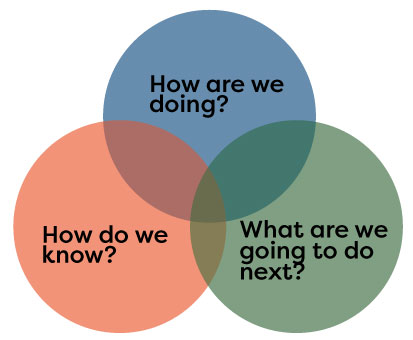
How are we doing
This is self-evaluation. What’s working well and what’s not? How does it perform against national or local indicators and comparators?
How do we know?
This is the evidence base for our judgement on how well we are doing. What evidence do we have, both numerical data and other forms of evidence such as feedback, perception surveys, etc.
What are we going to do next?
It is not enough to do self-evaluation if nothing happens with the results. So what actions are we going to take? What improvements are we intending to make?
But if we are going to conduct self-evaluation then we need a frame of reference to use. If we all use different frames of reference (or frameworks) then comparing and contrasting is more difficult, as is getting a council-wide self-evaluation. So, using a single framework makes sense in a large organisation and helps it use a common language of quality.
FAQs
Related resources
- Self-evaluation training pack, available in the resources section to support managers to cascade training across service areas. [Link to be added].