
Triangulation
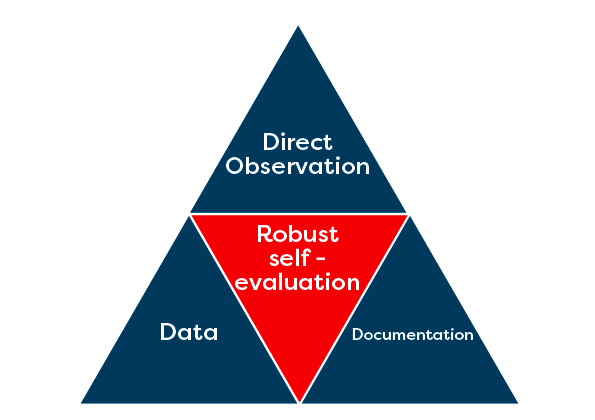
Self-evaluation should not be superficial. It must be regular and consistent, demonstrate challenge and lead to improvement actions or explain why an area is not a current priority.
It can be helpful to think, as scrutiny bodies do, in terms of triangulation. This is simply that evidence from a single source is not sufficiently reliable and so needs corroboration from other sources. Scrutiny bodies often consider this as below:
A breadth of approaches
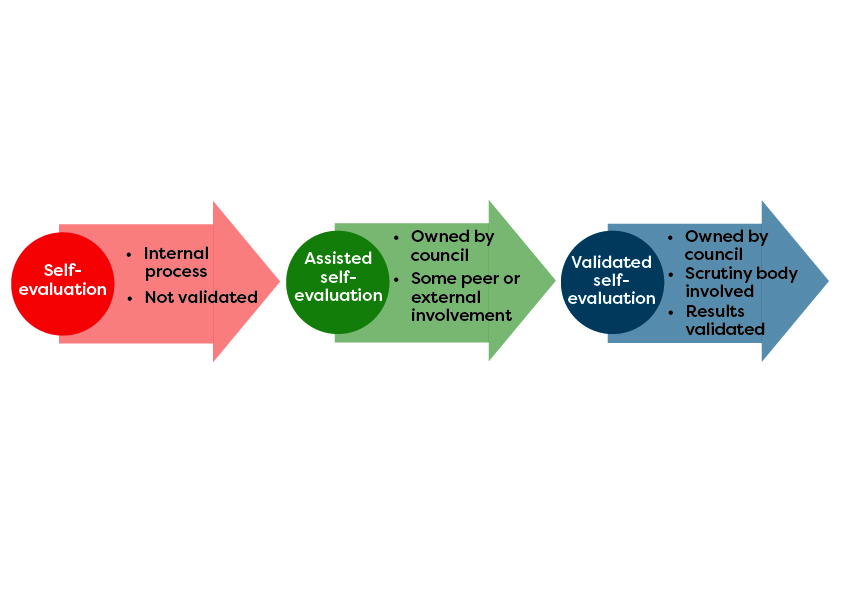
Different approaches can be used. The options below show increasing external involvement, which can increase acceptance of results by external bodies.
Breath of approaches
What the approaches mean
- Self-evaluation
Conducted by the authority using its own staff. Time commitment and scheduling are under council control. It may lack rigour, could give a false impression of quality to corporate leadership and will be considered evidence to be validated by scrutiny bodies.
- Assisted self-evaluation
Involves some externality, such as staff from another authority or service. Brings different thinking and challenge, offers opportunities to share expertise and manage workload and opens minds to new ways of tackling issues. Challenges include whether external colleagues will challenge practice enough, whether coordination takes extra time, staff time to support others and the need to develop peer reviewer skills. The Improvement Service Peer Collaborative Improvement approach is an example.
- Validated self-evaluation (VSE)
Involves scrutiny bodies. They provide support and challenge, can validate results and, if validated, should then adjust their scrutiny approach. Weak processes cannot be hidden. VSE requires trust between councils and scrutiny partners and would likely need a national agreement. It can reduce external scrutiny.
Further details on each approach:
FAQs
Related resources
- PSIF approach (Improvement Service), referenced as an example of assisted self evaluation.